
Start with Story: Why XR Activations Need Narrative Design Before Production Begins


Most XR activations start with technology and visuals. That approach often leaves audiences curious but disconnected. When narrative design leads from the start, the story shapes every interaction, pacing, and environment. This creates immersive marketing that moves people to explore and remember. Ready to see how story-first XR turns tech into meaningful engagement? Learn more about narrative design in XR.
The Importance of Narrative Design

In XR activations, the story should always come first. A well-crafted narrative can shape your entire experience, making it memorable and engaging for the audience.
Story-First XR Approach
Imagine walking into a digital world where every element has a purpose. This is the magic of a story-first approach. Here, the narrative drives the experience, ensuring each interaction feels meaningful. Instead of just showcasing tech, you engage your audience by drawing them into a story they won’t forget.
Think about classic movies. They captivate us because the story pulls us in, not just the special effects. The same principle applies to XR. By setting the story first, you create a framework where technology enhances the narrative. It’s about giving your audience a reason to care, explore, and remember.
Enhancing Audience Engagement
Audience engagement is key in XR. A compelling narrative hooks them. When users feel part of the story, they’re more likely to engage deeply. This connection transforms passive viewers into active participants.
Consider a virtual tour. With a strong story, it becomes more than just visuals. Users feel they’re part of an unfolding journey. This emotional connection increases recall and impact. In a crowded market, where everyone uses tech, a story-first approach makes your activation stand out.
Structuring Successful XR Activations
The success of XR activations relies heavily on structure. This foundation is built by mapping out the experience to guide your audience through an engaging journey.
Mapping the Audience Journey
Begin with the end in mind. What do you want your audience to feel? Mapping their journey starts with understanding your goals and the emotions you want to evoke. This process involves identifying key touchpoints where users interact with your story.
Think of this as a roadmap. Each stop along the way should build on the last, keeping the audience engaged. By clearly defining these moments, you ensure that the narrative flows smoothly, keeping users invested throughout the experience.
Crafting Interaction Beats
Interaction beats are pivotal moments where the audience connects with your story. These are designed to capture attention and spark curiosity. By carefully crafting these interactions, you ensure a seamless and engaging experience.
Consider a video game. Players are drawn in by critical moments that propel the story forward. In XR, these beats should be intuitive and rewarding, encouraging users to delve deeper into the experience. Each interaction should feel natural but impactful, driving the narrative while maintaining engagement.
From Blueprint to Production
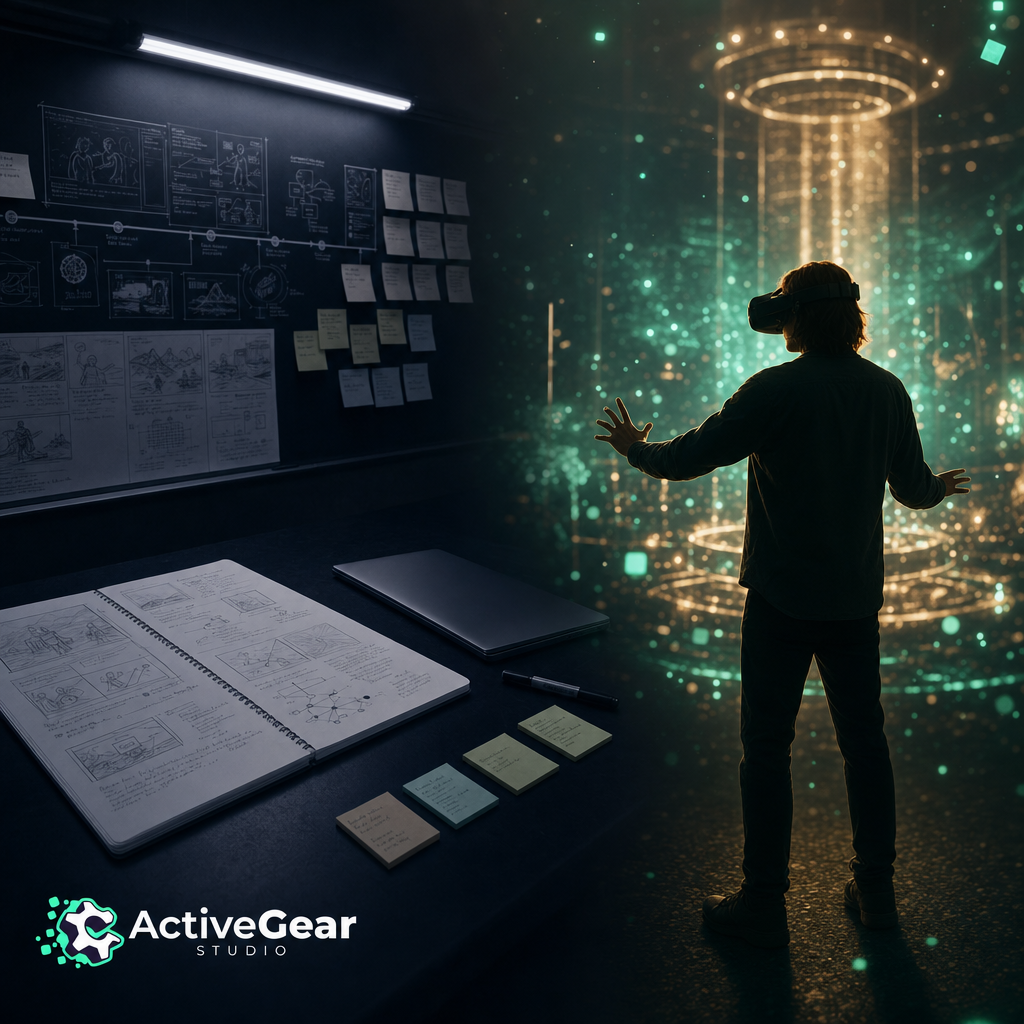
Transitioning from a well-mapped blueprint to production is where the magic happens. This phase is about bringing the narrative to life through thoughtful design and technology integration.
Defining Experience Architecture
Experience architecture is the backbone of XR. It’s about creating a cohesive environment where every element supports the story. This involves careful planning and design to ensure that all components work together harmoniously.
Picture an architect designing a building. Every decision, from layout to materials, impacts the final structure. Similarly, in XR, defining the architecture ensures that the experience feels unified and complete. This attention to detail helps maintain the story’s integrity, enhancing the overall impact.
Integrating Technology Seamlessly
Technology is the tool that brings your narrative to life. However, it should never overshadow the story. Seamless integration means using tech to enhance, not distract. This balance ensures that the narrative remains at the forefront.
Think of technology as the supporting cast in a play. It plays a crucial role but shouldn’t steal the spotlight. By integrating it thoughtfully, you maintain focus on the story, creating an immersive environment that captivates your audience.
By placing narrative design at the core of XR activations, you ensure that the technology serves the story, not the other way around. This approach not only enhances engagement but also delivers a memorable experience that resonates with your audience.